
Workflow
Operations workspace
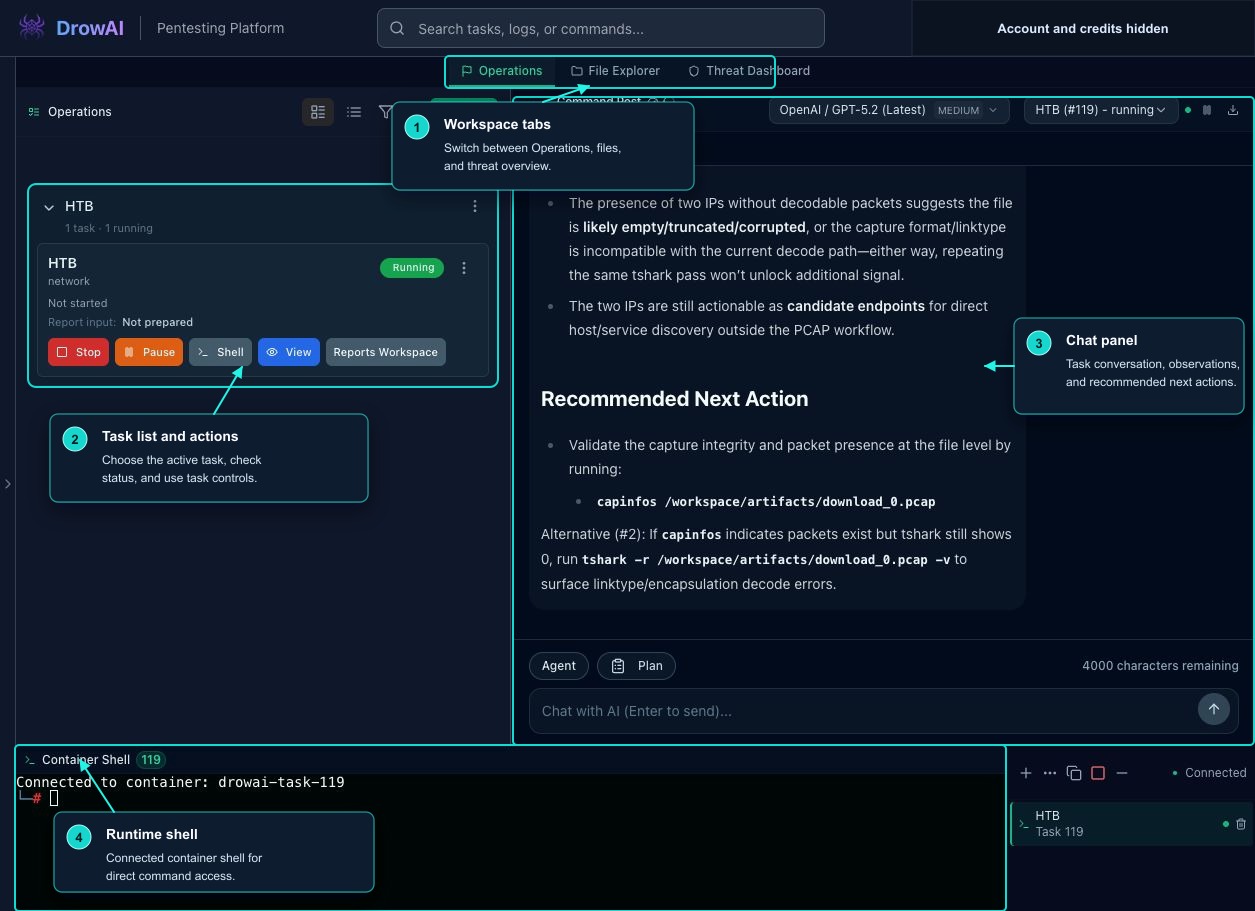
A visual guide to the main DrowAI Operations tab and the purpose of each primary region.
The Operations tab is the main working surface in DrowAI. It brings together engagement task management, active task chat, runtime status, and shell access in one operator view.
Primary regions
- Workspace tabs switch between Operations, File Explorer, and Threat Dashboard.
- The task panel can show tasks grouped by engagement or as a flat list.
- The New menu creates tasks and engagements from the same workspace.
- Engagement sections can be expanded, archived, restored, or used to add a task.
- Task cards show name, first scope line, engagement label, lifecycle status, and reporting-input state.
- Task actions expose only relevant controls such as start, stop, pause, resume, shell, details, prepare, delete, and reporting workspace.
- The chat panel follows the active task and shows conversation history, activity cards, tool approvals, clarification prompts, retry states, and queued sends.
- Model controls choose the provider, model, reasoning effort, and chat/agent mode before a message is sent.
- The terminal dock opens runtime shell access for tasks where the user has task-control permission.
Working pattern
Use Operations when you are actively running or supervising task work. Tasks always belong to an engagement: select an existing engagement when the task should join an existing assessment, or create a task without selecting one and DrowAI will create an engagement for it automatically. Start the task that should run, then use chat and shell output to guide the session. Stop a task when the useful runtime activity is complete, then move to File Explorer, Knowledge, Usage, or Reports for review.
The Threat Dashboard tab is visible in the main workspace, but the user guide does not treat it as a primary documented workflow yet.
How to read this page
Use this page as a UI orientation aid, not as a procedural pentesting guide. Public screenshots should explain layout and workflow while avoiding sensitive task details, credentials, private targets, or reusable offensive steps.